
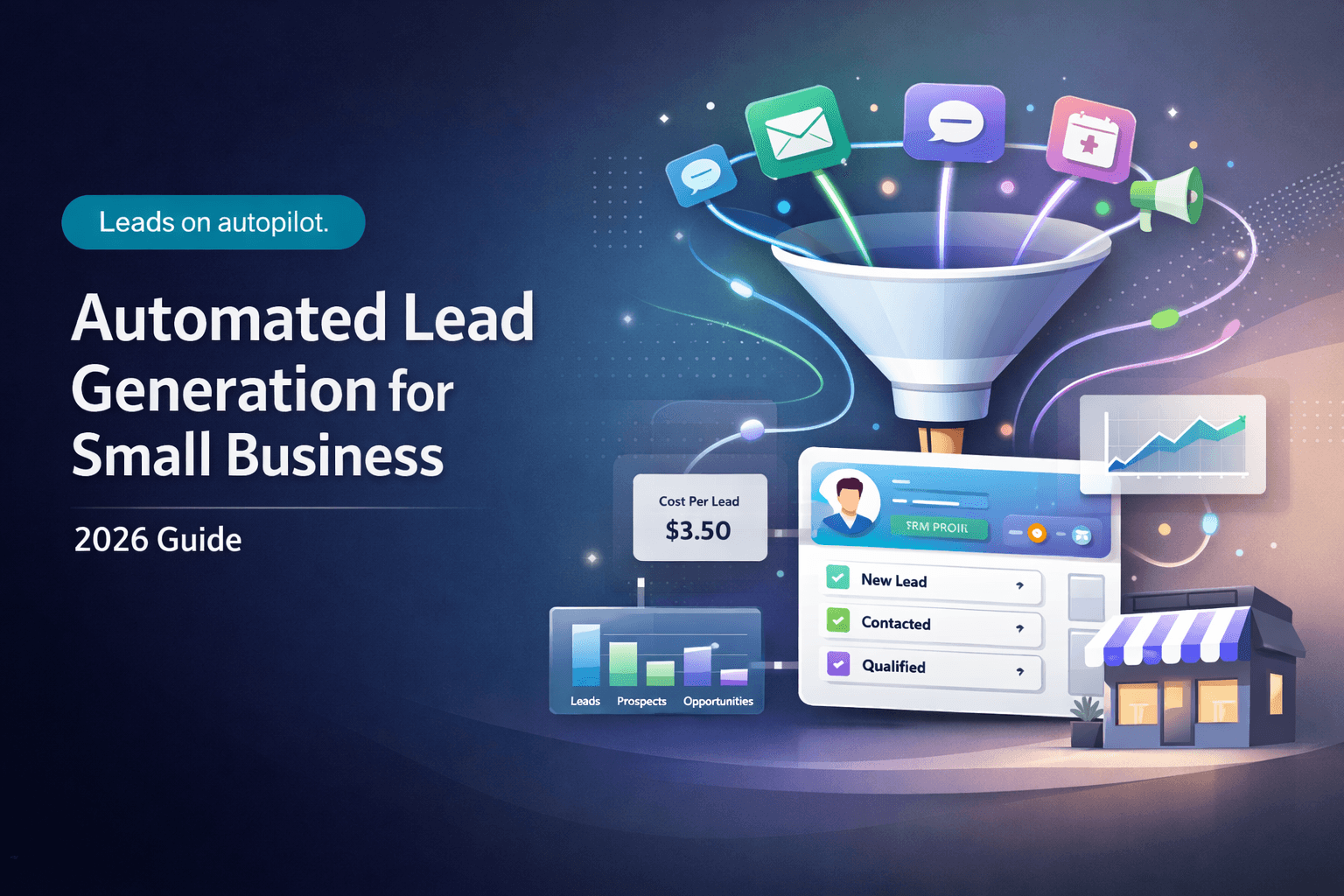
Automated Lead Generation for Small Business: 2026 Guide
Looking to grow your small business without overwhelming your sales team? In 2026, automated lead generation isn’t just a trend, it’s the new standard for ambitious entrepreneurs. If you want inspiration before you wire up funnels, our roundup of AI automation ideas for small business pairs well with this guide. Below we cover the top tools, strategies, and step-by-step processes to help you attract, nurture, and convert leads automatically, whether you’re just starting out or upgrading an existing system, with practical advice tailored for US-based small businesses.
Why Automate Lead Generation in 2026?
Manual lead generation is time-consuming, inconsistent, and often expensive. Automation has become essential for small businesses that want to compete with larger companies. Here’s why:
- Save Time: Automated systems handle repetitive tasks like outreach, follow-ups, and lead scoring, freeing your team to focus on closing deals.
- Scale Efficiently: Reach thousands of prospects at once—something manual processes can’t match.
- Cut Costs: Reduce the need for large sales teams and minimize human error.
- Stay Competitive: According to Vocenogoogle’s 2026 strategy report, over 70% of US small businesses now use some form of lead generation automation.
Pain Points Solved:
- Inconsistent lead flow
- Missed follow-ups
- Poor segmentation
- High acquisition costs
By embracing automation, small businesses can level the playing field and focus on what matters most: building relationships and closing sales.
Understanding Lead Generation Automation: Key Concepts
Before diving into the “how,” let’s clarify a few key concepts:
- Lead Generation Automation Tools: Software that automates finding, qualifying, and nurturing potential customers. Examples include CRMs, email marketing platforms, and AI-powered chatbots.
- AI Lead Generation Strategies: Using artificial intelligence to personalize outreach, score leads, and optimize campaigns in real time.
- Automation vs. Manual: Automation takes care of repetitive, rules-based tasks, while humans focus on strategy and relationship-building.
- Common Myths:
- Myth: Automation is only for big companies.
- Fact: Tools are now affordable and user-friendly for small businesses.
- Myth: Automation kills personalization.
- Fact: AI enables hyper-personalized messaging at scale.
Pro Tip: Platforms like AffinityBots let you build multi-agent teams that coordinate outreach, follow-up, and data enrichment, making automation accessible even for solopreneurs.
Step-by-Step: Setting Up Automated Lead Generation
Ready to automate your lead generation? Here’s a practical, step-by-step roadmap:
1. Choose the Right Tools
- CRM (Customer Relationship Management): Centralizes your contacts and tracks interactions. Popular options include HubSpot and Zoho CRM.
- Email Automation: Schedule and personalize emails at scale. Consider Mailchimp or ActiveCampaign.
- AI Lead Gen Tools: Platforms like MeetAlfred and Outfunnel automate outreach, scoring, and nurturing.
- Chatbots & Forms: Capture leads directly from your website or social media.
2. Automate Lead Capture
- Embed smart forms on your website and landing pages.
- Use chatbots to engage visitors and collect contact info around the clock.
- Integrate social media lead ads for instant data capture.
3. Segment and Score Leads
- Set up rules to automatically segment leads by source, behavior, or demographics.
- Use AI to score leads based on engagement, fit, and buying intent.
- Route hot leads directly to your sales team.
4. Nurture Leads Automatically
- Build email drip campaigns tailored to each segment.
- Trigger follow-ups based on actions, such as downloads or clicks.
- Use SMS or chat for timely reminders and offers.
- For a deeper playbook on sequences and triggers, see How to automate lead follow-up.
5. Handover to Sales
- Notify your sales team instantly when a lead is sales-ready.
- Sync data with your CRM for a seamless handoff.
- Track every touchpoint for full visibility.
Top Automated Lead Generation Tools for Small Businesses (2026)
Choosing the right tool can make or break your automation strategy. Before you compare vendors, it helps to see how stages connect end to end:
Lead capture → sales handoff
A typical automated path for small teams
Here’s a quick comparison of the top contenders:
| Tool | Best For | Key Features | Pricing (2026) | Pros | Cons |
|---|---|---|---|---|---|
| MeetAlfred | LinkedIn outreach | Multi-channel, AI follow-up | $49/mo | Easy setup, AI-driven | Limited CRM depth |
| Outfunnel | CRM integration | Email, web tracking, scoring | $29/mo | Deep CRM sync | Fewer channels |
| AffinityBots | Multi-agent workflows | Custom automations, AI agents | $59/mo | Flexible, scalable | Learning curve |
| HubSpot | All-in-one | CRM, email, automation | Free–$50+/mo | Robust features | Can get pricey |
Tip: Always start with a free trial and map your workflow before committing.
Affiliate Disclaimer: Some links may be affiliate links. We only recommend tools we trust.
Proven Strategies: How Small Businesses Succeed with Automation
Let’s look at real-world examples:
Case Study: Main Street Marketing (Austin, TX)
Main Street Marketing, a boutique agency, implemented AffinityBots to automate their lead capture and follow-up. Within three months, they saw:
- 40% increase in qualified leads
- 25% reduction in response time
- Higher conversion rates thanks to personalized, timely outreach
Industry-Specific Examples
- Local Retail: Automated SMS campaigns for flash sales.
- B2B Services: AI-powered LinkedIn outreach and appointment scheduling.
- Healthcare: HIPAA-compliant chatbots for patient inquiries.
US small businesses are leading the way in adopting automation, especially in competitive urban markets.
Overcoming Common Challenges & Mistakes
Automation isn’t foolproof. Here’s how to avoid the most common pitfalls:
- Over-automation: Don’t lose the human touch. Blend automation with personal outreach.
- Poor Segmentation: Generic messaging leads to low engagement. Use data to segment and personalize.
- Compliance Issues: Stay updated on US privacy laws such as TCPA and CAN-SPAM.
- Lack of Follow-up: Automation should enhance, not replace, relationship-building.
Quick Fixes:
- Regularly review and update your workflows.
- Test and optimize messaging.
- Train your team on new tools.
Measuring Success: KPIs & Optimization Tips
Tracking the right metrics is key to ongoing improvement. Focus on:
- Conversion Rate: Percentage of leads that become customers.
- Cost Per Lead (CPL): Total spend divided by number of leads.
- Lead Quality Score: Use AI to assess engagement and fit.
- ROI: Compare revenue generated to automation costs.
Optimization Tips:
- Run A/B tests on emails and landing pages.
- Use dashboards from platforms like HubSpot or AffinityBots for real-time insights.
- Continuously refine your segments and triggers.
2026 Trends: What’s Next in Automated Lead Generation?
Stay ahead of the curve with these emerging trends:
- AI Everywhere: Deeper personalization, predictive analytics, and conversational AI are now standard.
- Privacy & Regulation: Expect stricter US data privacy laws. Choose tools with robust compliance features.
- Integration: Seamless connections between CRM, email, SMS, and social platforms are a must.
- Multi-Agent Automation: Platforms like AffinityBots let you deploy specialized AI agents for each stage of the funnel, coordinating efforts for maximum efficiency.
For a deeper dive, check out Outfunnel’s Lead Generation Guide.
Frequently Asked Questions
How much does automated lead generation cost for small businesses in 2026?
Most tools range from $20 to $100 per month. Custom solutions may cost more but offer greater flexibility.
How long does setup take?
Basic workflows can be live in a day. More complex automations may take a week or two.
What’s the best tool for US small businesses?
It depends on your needs. MeetAlfred is great for LinkedIn, Outfunnel for CRM integration, and AffinityBots for custom, multi-agent workflows.
Can automation replace my sales team?
No, but it lets your team focus on high-value conversations and closing deals.
How do I ensure compliance with US laws?
Choose reputable tools, stay updated on regulations, and always get consent before contacting leads.
Conclusion & Next Steps
Automated lead generation is no longer optional for small businesses in 2026—it’s the key to sustainable growth. By choosing the right tools, setting up smart workflows, and staying on top of trends, you’ll attract better leads and close more deals with less effort.


